Many scientific papers about ora pro nobis (Pereskia aculeata) came out in 2026, most of them from Brazilian universities. Here is what they show, what they don’t, and how strong each kind of evidence is.
The short version: the nutrition story is solid. Most of the health research is still early, in labs and animals, and has not been tested in people.
What the research supports well
Every paper agrees on the basics: ora pro nobis is an unusually nutritious leafy green.
- Protein. Dried leaves contain about 15 to 29% protein, depending on the study.1,2,3,4 That is high for a leafy green. Earlier work found it about 80% digestible, with lysine and tryptophan among its amino acids.1
- Protein after digestion. In a simulated digestion test, about 61% of the protein in dried leaf flour was bioaccessible, meaning released and available to be absorbed, in the intestinal phase.3
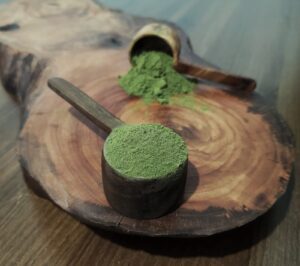
- Fiber and mucilage. Leaf flour had about 17.5% total fiber in one study.3 Up to a third of the dry leaf is mucilage, a soluble fiber that makes the powder thicken in liquid.1
- Minerals. The leaves contain potassium, calcium, iron, magnesium and manganese, among others.1,3 Amounts vary a lot between studies (more on that below).
- Food uses. Researchers have added the leaf flour to breads, pasta, cakes, burgers, ice cream and drinks.5 The mucilage has even been studied as an egg replacer.1
In Brazil, ora pro nobis has a long history as everyday food, and people still call it “carne de pobre,” or poor man’s meat, because of its protein.
From leaf to flour
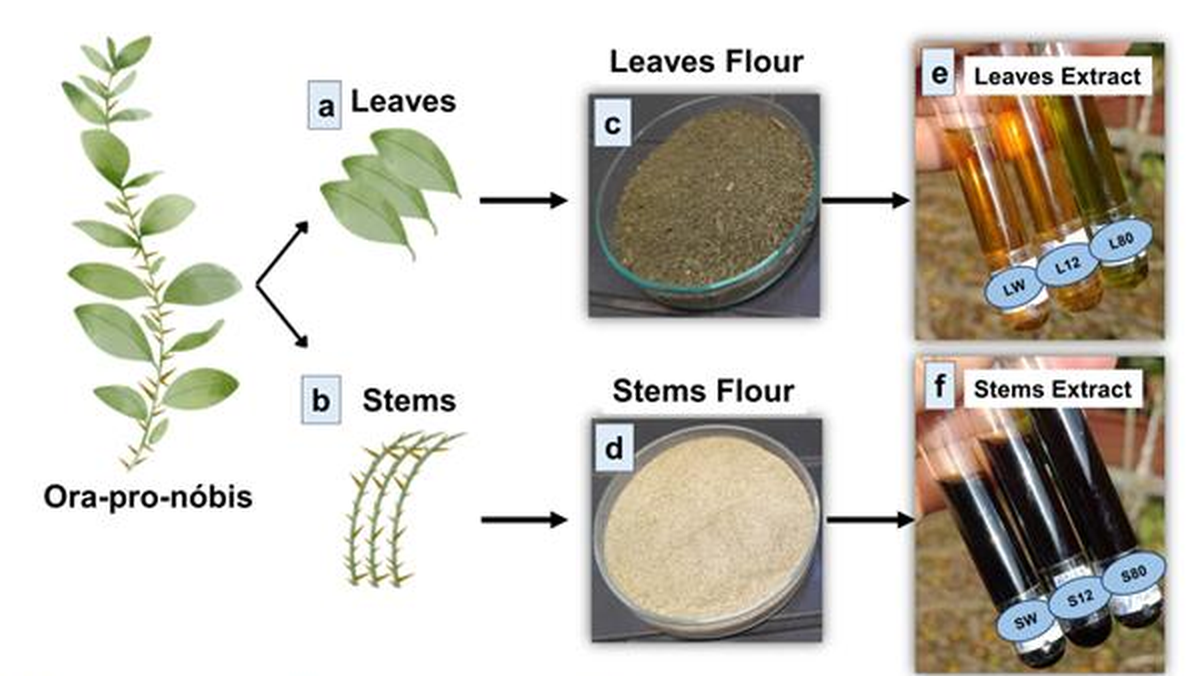
This figure shows how the researchers prepared their samples. The green leaf flour (c) is the kind of dried leaf powder people cook with. The pale stem flour (d) is much higher in fiber, but stems are thorny and rarely eaten. The tubes (e, f) are lab extracts made with water or alcohol to measure the plant’s compounds; they are a research tool, not something you eat.
What has been tested in people
None of the nine papers here is a new human study. The only human research so far is two small trials, from 2019 and 2020, both summarized in a 2026 review.1
- Who: 9 men in one trial and 22 women in the other, all adults with overweight.
- What they ate: foods made with 10 g of ora pro nobis flour: cookies in one trial and, in the other, a powdered milk drink taken daily for six weeks.1,5
- What changed: people reported fewer digestive complaints, such as gas, belching and stomach rumbling, and felt fuller.1
- What did not change: gut bacteria and markers of blood sugar and cholesterol. Results on body weight were mixed.
Two trials with 31 people in total are a start, not proof. The review’s own conclusion is that the evidence “does not yet endorse” ora pro nobis for preventing or treating chronic disease.1
One caution from that review: people with chronic kidney disease should talk to their dietitian first, because ora pro nobis is rich in potassium, phosphorus and protein.
Early research: interesting, not proven
Most of these papers study ora pro nobis in fruit flies, rats, test tubes or theory. These studies show what might be worth testing in people later. They do not show that eating it does these things for you.
| Paper | What was studied | What it found | How much it tells us |
|---|---|---|---|
| De Miranda Schmidt et al.6 | Aged fruit flies fed ora pro nobis powder | Flies survived a toxin better and kept moving better | Little. Flies are very different from people |
| Silva ACR et al.3 | Leaf and stem flour in lab tests | Extracts slowed common bacteria; stem flour partly blocked starch digesting enzymes | Little. Test tube results; the enzyme effect was strongest in the stem, which people rarely eat |
| Silva JG et al.2 | Freeze dried leaf powder | Contains vitamin C, phenolic compounds, chlorophyll and carotenoids; the authors report freeze drying preserved them | Useful for composition, not for health effects |
| Fernandes et al.7 (review) | Anti inflammatory studies | Leaf extracts reduced inflammation in rat and mouse models | The authors call it “promising but preliminary” |
| Gracie Chamma et al.4 (review) | A theory about fiber and gut bacteria | Proposes that the fiber may feed gut bacteria that make butyrate | A hypothesis. The authors say human trials are still lacking |
| Cruz et al.8 | Leaf extract fractions in lab tests | Extract fractions protected red blood cells from damage in test tubes | Little. Lab tests with concentrated extracts |
| Teixeira et al.9 | Leaf extract coated in a polymer, in simulated digestion | The coating kept more antioxidant activity through simulated digestion, but released fewer of the compounds | Useful for product development, not for health effects |
Many of these studies used concentrated extracts, not the whole leaf as food, which is another reason not to expect the same results from a teaspoon in a smoothie.
What’s inside the leaf
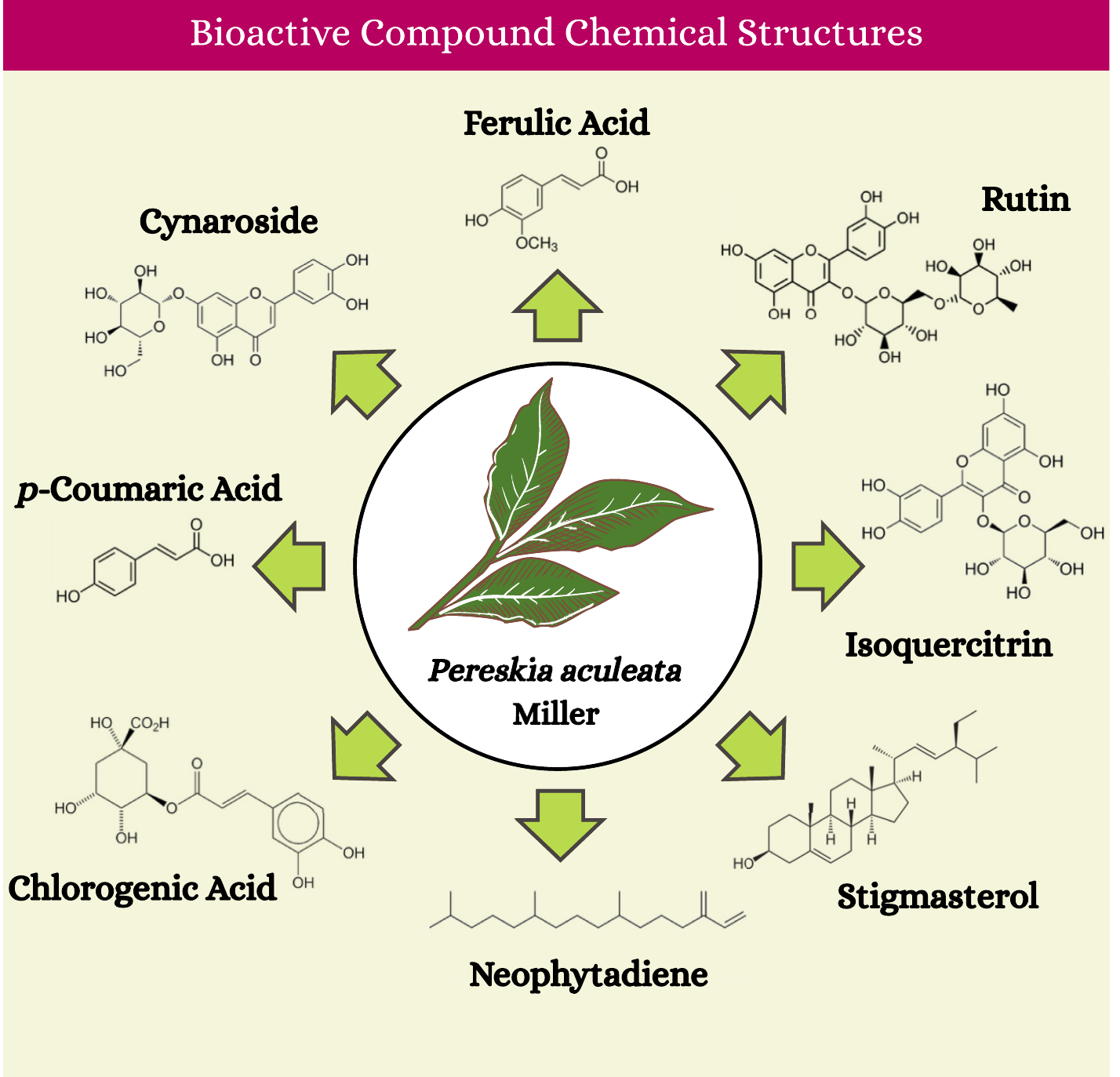
This figure shows some of the natural plant compounds researchers have found in ora pro nobis leaves. Many of them have also been studied in other foods. Here is what that research says, and how strong it is.
- Chlorogenic acid is the main phenolic compound in coffee. Animal and human studies have linked it with how the body handles sugar and fat, but the authors describe its role as a possibility rather than a proven effect.10
- Rutin is a flavonoid found in buckwheat and other plants. Researchers think it may be one of the compounds behind some of the effects seen in buckwheat studies.11
- Isoquercitrin is a form of quercetin, a flavonoid found in many fruits, vegetables and herbs. The body absorbs it more easily than quercetin itself, which is why researchers find it interesting.12
- Ferulic and p‑coumaric acid are phenolic acids common in whole grains, fruits and vegetables.
- Cynaroside is a flavonoid named after the artichoke (Cynara).
- Stigmasterol is a plant sterol. Plant sterols are the best studied compounds on this list: eaten at about 0.6 to 3.3 g a day, usually from fortified foods, they lower LDL cholesterol by about 6 to 12%.13 That is far more than a teaspoon of any leaf powder provides.
None of these effects has been tested for ora pro nobis itself. How much of each compound a teaspoon of leaf powder provides, and whether that amount makes a difference, has not been studied.
Why the numbers don’t match from study to study
Published nutrient values for ora pro nobis vary a lot. Iron is a good example: one 2026 study measured about 3 mg per 100 g of dried leaf flour,3 while the averages collected in a 2026 review come to about 19 mg per 100 g.1
The reasons are ordinary: the soil, the region, the age of the leaves, the season, and how the leaves were dried and analyzed. That is true of any plant food. So a nutrition label is an average from a lab analysis, not a guarantee for every pouch.
Separately, every batch of nobis is tested by an independent lab for food safety before it is sold.
The bottom line
Ora pro nobis is a nutritious leafy green with a long history as food in Brazil. The research clearly supports its protein, fiber and mineral content. Claims about inflammation, blood sugar or aging have not been shown in people, and the digestive comfort results come from just two small trials.
That’s the way we like to talk about food: eat it because it is a good, simple ingredient, and stay curious about what future studies find. When new human research comes out, we’ll update this page.
Sources
- Alvarenga L, Lobo J, Rodrigues RCB, Silva JG, Santos OV, Mafra D. Ora-pro-nobis (Pereskia sp.) as an unconventional edible plant: nutritional potential, bioactive compounds, and evidence related to non-communicable chronic diseases. PharmaNutrition. 2026;35:100479. doi:10.1016/j.phanu.2026.100479
- Silva JG, Ferreira LMMC, Rosário RC, et al. Powdered leaves of ora-pro-nóbis (Pereskia aculeata): an emerging source of proteins, phytochemicals, bioactive compounds, and antioxidants. Food Sci Technol. 2026;46:e600. doi:10.5327/fst.600
- Silva ACR, Ávila Berthier S, Etgeton SAP, et al. Leaf and stem of Ora-pro-Nóbis (Pereskia aculeata Mill): physicochemical composition, biological activities, and gastrointestinal bioaccessibility of protein and antioxidants. Sci Plena. 2026;22(6):066501. doi:10.14808/sci.plena.2026.066501
- Gracie Chamma NM, Mercer JR, Masson ML. Nutritional and bioactive properties of Pereskia aculeata Miller: potential in nutrigenomics and functional food development. J Funct Foods. 2026;144:107379. doi:10.1016/j.jff.2026.107379
- Ientz GAS, Alves ES, Alvares GB, et al. Ora-pro-nobis (Pereskia aculeata): uma revisão sobre suas propriedades nutricionais, benefícios à saúde e aplicações em produtos alimentícios. REASE. 2026;12(7):1-14. doi:10.51891/rease.v12i7.28845
- De Miranda Schmidt J, Musachio E, Pulcinelli DLF, et al. Pereskia aculeata leaves as a functional food: neurobehavioral and redox homeostasis protection of aged Drosophila melanogaster against paraquat exposure. J Food Biochem. 2026;2026:7286811. doi:10.1155/jfbc/7286811
- Fernandes LL, Francisco GO, Cunha WR, et al. A review on the phytochemistry and anti-inflammatory activities of Pereskia aculeata Miller. Nat Prod Commun. 2026;21(8):1934578X261481891. doi:10.1177/1934578X261481891
- Cruz TM, Stelle Y, Granato D, Marques MB. Solvent-solvent fractionation of ora-pro-nobis (Pereskia aculeata) leaves enhances polyphenol enrichment and red blood cell protection against oxidative and osmotic stress. ACS Omega. 2026;11(12):19292-19306. doi:10.1021/acsomega.5c12684
- Teixeira VMC, de Oliveira A, dos Santos Filho JR, et al. Encapsulation in polyvinylpyrrolidone protects the ora-pro-nobis (Pereskia aculeata Miller) extracts against the deleterious effects of in vitro gastrointestinal digestion. Food Biophys. 2026;21(1):25. doi:10.1007/s11483-026-10116-w
- Tajik N, Tajik M, Mack I, Enck P. The potential effects of chlorogenic acid, the main phenolic components in coffee, on health: a comprehensive review of the literature. Eur J Nutr. 2017;56(7):2215-2244. doi:10.1007/s00394-017-1379-1
- Giménez-Bastida JA, Zieliński H. Buckwheat as a functional food and its effects on health. J Agric Food Chem. 2015;63(36):7896-7913. doi:10.1021/acs.jafc.5b02498
- Valentová K, Vrba J, Bancířová M, Ulrichová J, Křen V. Isoquercitrin: pharmacology, toxicology, and metabolism. Food Chem Toxicol. 2014;68:267-282. doi:10.1016/j.fct.2014.03.018
- Ras RT, Geleijnse JM, Trautwein EA. LDL-cholesterol-lowering effect of plant sterols and stanols across different dose ranges: a meta-analysis of randomised controlled studies. Br J Nutr. 2014;112(2):214-219. doi:10.1017/S0007114514000750