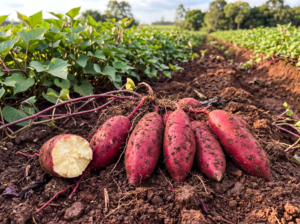
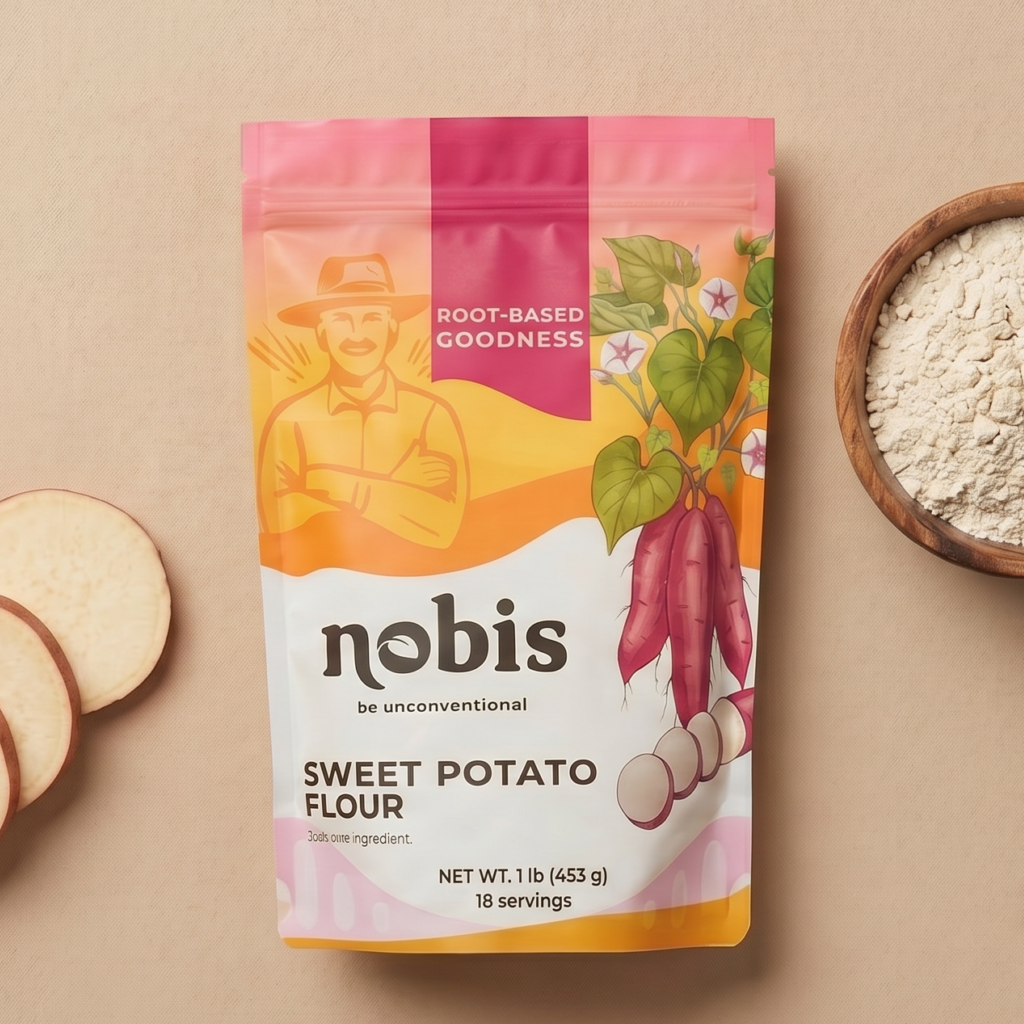
Sweet potato flour is a whole food carbohydrate, and how you use it matters as much as what it is.
One habit worth addressing: adding sweet potato flour straight to a cold protein shake. Carbs plus protein, before or after a workout, seems like a convenient pairing. But there is a reason this combination does not work as well as it looks on paper.
The Raw Flour and Protein Shake Problem
Sweet potato naturally contains proteins called trypsin inhibitors, most notably sporamin, which makes up about 60% to 80% of the soluble protein in sweet potato.1 In the plant, these compounds serve a protective function. In your digestive system, they partially block trypsin, the enzyme your pancreas produces to break down dietary protein in the small intestine.2
Here is why this matters for fitness nutrition: trypsin inhibitors do not target sweet potato protein alone. They inhibit the enzyme itself, which means they can impair the digestion of every protein in that meal, including the protein powder in your shake.2
In a 2012 in vivo study, raw sweet potato protein was 50.4% digestible. After autoclaving (pressure cooking at 127°C), it was 95.1% digestible, and trypsin inhibitor activity dropped from 67.8 to 2.0 mg per gram of protein.3
When sweet potato flour goes into a cold shake without cooking, those inhibitors remain active. You may lose some nutritional value from the flour itself and also reduce the absorption of the protein powder you added to support your training.
Two More Reasons Raw Flour Falls Short
Trypsin inhibitors are the most direct concern for protein absorption, but raw sweet potato flour has two more compounds worth understanding, and cooking addresses both.
Tannins
Sweet potato contains tannins, a class of polyphenols that bind to proteins in the digestive tract and reduce how efficiently dietary protein is absorbed. Tannins also bind minerals like iron and zinc.2 In a cold shake, tannins from the raw flour work alongside trypsin inhibitors. Cooking reduces tannin content, particularly in water based preparations where they leach out of the food.2
Resistant Starch
This one carries a nuance. Raw sweet potato is high in a form of starch the small intestine cannot digest, called type 2 resistant starch.4 In a lab test on Rubissol, the raw dried flour had the most starch that resisted digestion, and oven roasting had the least.5 For fitness, this means the carbohydrates in raw flour are not efficiently available as fuel. If you add it to a pre workout shake expecting quick energy, raw flour largely does not deliver that.
Cooking gelatinizes the starch, converting it into a form your body can use for energy. If it is cooked and then cooled, as in baked goods or porridge eaten later, some starch converts back into a resistant form that feeds gut bacteria.4 Either way, cooking is the first step.
Heat is the Solution
This is an easy problem to avoid. Sweet potato flour is meant for cooking. When it goes into a recipe that involves heat, cooking inactivates the trypsin inhibitors, reduces tannins and gelatinizes the starch.
In one study, heating sweet potato at 100°C led to rapid inactivation of its trypsin inhibitors.6 Baking, cooking pancakes, making porridge and stovetop cooking all reach that temperature.
Our flour is dried at low heat, below the temperature that inactivates these compounds. In the same study, sweet potato heated at 70°C for up to 2 hours kept 80% to 90% of its trypsin inhibitor activity.6 So treat the flour as raw until it is cooked.
How to Use Sweet Potato Flour for Fitness Goals
Here are practical ways to use sweet potato flour:
Pre-workout fuel
Baked goods made with sweet potato flour, such as pancakes, muffins, energy bars or flatbreads, provide complex carbohydrates that digest well and fuel longer training sessions. Because they have been cooked, the antinutrients are largely inactivated.
Post-workout recovery meals
Sweet potato flour works in savory dishes too: thickening soups, added to egg dishes, or in grain free wraps. Paired with a protein source in a cooked meal, it complements protein absorption rather than competing with it.
Baked protein snacks
Rather than adding the flour to a cold shake, mix it into a baked protein snack: sweet potato flour with protein powder, eggs and natural fats, then bake. The heat treats both ingredients together, and you get the carbohydrate and protein combination you wanted without the digestive conflict.
A Note on the Cold Shake Habit
If you have been adding sweet potato flour to cold shakes, there is no need for alarm. The effect on protein absorption depends on the dose, and small amounts now and then are unlikely to cause problems for most healthy adults. But if optimizing protein absorption is part of your training, it is worth shifting this habit toward cooked preparations.
The Bottom Line
Sweet potato flour is a whole food ingredient that works best the way it was intended, as a cooking ingredient. Once heat is involved, trypsin inhibitors are inactivated, tannins drop and the starch becomes available as fuel.
Sources
- Yeh KW, Chen JC, Lin MI, Chen YM, Lin CY. Functional activity of sporamin from sweet potato (Ipomoea batatas Lam.): a tuber storage protein with trypsin inhibitory activity. Plant Mol Biol. 1997;33(3):565-570. doi:10.1023/a:1005764702510
- Samtiya M, Aluko RE, Dhewa T. Plant food anti-nutritional factors and their reduction strategies: an overview. Food Prod Process Nutr. 2020;2:6. doi:10.1186/s43014-020-0020-5
- Sun M, Mu T, Zhang M, Arogundade LA. Nutritional assessment and effects of heat processing on digestibility of Chinese sweet potato protein. J Food Compos Anal. 2012;26(1-2):104-110. doi:10.1016/j.jfca.2012.03.008
- Englyst HN, Kingman SM, Cummings JH. Classification and measurement of nutritionally important starch fractions. Eur J Clin Nutr. 1992;46(suppl 2):S33-S50.
- Bedin AC, Bach D, Junges MFS, Lacerda LG, Demiate IM. Influence of cooking method on the in vitro digestibility of starch from sweet potato roots. Braz Arch Biol Technol. 2023;66:e23230872. doi:10.1590/1678-4324-2023230872
- Sasi Kiran K, Padmaja G. Inactivation of trypsin inhibitors in sweet potato and taro tubers during processing. Plant Foods Hum Nutr. 2003;58(2):153-163. doi:10.1023/A:1024476513899