Here’s a number that might surprise you: since farming began, people have eaten about 7,000 different plant species.1Seven thousand. Think about that for a second.
Today, just 17 species provide 90% of the world’s food supply.2 A small group of nine crops, including sugar cane, maize, rice, and wheat, accounts for over 66% of global crop production by weight.3
We went from 7,000 plants to 17 crops, doing almost all the work. And the plants that got left behind? Many of them were more nutritious than the ones that stayed.
It Wasn’t About Nutrition
The crops that dominate today’s food system didn’t win because they were the best for human health. They won because they worked for industrial agriculture.
They could be grown in massive, uniform rows. Harvested by machine. Packed, shipped, and stored for months without spoiling. Sold in global markets that needed a consistent, predictable supply.
Plants that didn’t fit that model, no matter how nutritious, no matter how long communities had been eating them, were quietly dropped. Not because anyone decided they were inferior. Simply because they didn’t scale.
Since the early 1900s, about 75% of plant genetic diversity has been lost. More than 90% of crop varieties that once existed in farmers’ fields are gone.4,5 A 2024 review in Nutrition Reviews described the result plainly: the modern food system has led to “plants with unsatisfactory nutritional value being overproduced, whereas nutrient-rich plant species used in earlier times remain neglected.”6
In other words, we optimized for logistics, not nutrition. And the gap shows up in our health. Researchers are increasingly linking this dietary narrowing to rising rates of micronutrient deficiency and chronic disease around the world.7,8
Brazil Had a Name for What Got Left Behind
While the global food supply was narrowing, something else was happening in Brazil.
Rural communities, especially Indigenous communities and small farmers, kept eating from a much wider range of plants. Plants that grew wild along roadsides and forest edges. Plants their grandparents had eaten. Plants that didn’t have a place in any supermarket but had sustained people for generations.
In 2007, a Brazilian botanist named Valdely Kinupp decided these plants deserved a proper name. In his doctoral thesis at the Federal University of Rio Grande do Sul, he coined the term plantas alimentícias não convencionais known as PANCs.9 It translates to “non-conventional food plants.” Not exotic. Not superfoods. Just plants that are edible, often highly nutritious, and overlooked by the mainstream food system.
Brazil is one of the most plant-rich countries on Earth, home to roughly 15% to 20% of the world’s biological diversity.10 Yet even there, most edible plants go unnoticed. In their 2014 catalog, botanists Kinupp and Lorenzi identified 351 plants with food potential that Brazilians had largely forgotten or never knew they could eat.11 In 2017, Instituto Kairós published the Guia Prático de PANC, a practical guide to non-conventional food plants.12
What makes PANCs interesting isn’t just their nutritional value. It’s their resilience. Many grow with minimal care, adapt to local conditions, and thrive in places conventional agriculture ignores. The FAO has formally classified certain neglected plants as “Future Smart Food”, defined as species that are nutrient-dense, climate-resilient, economically viable, and locally available.13
Ora pro nobis: The PANC That Communities Refused to Forget
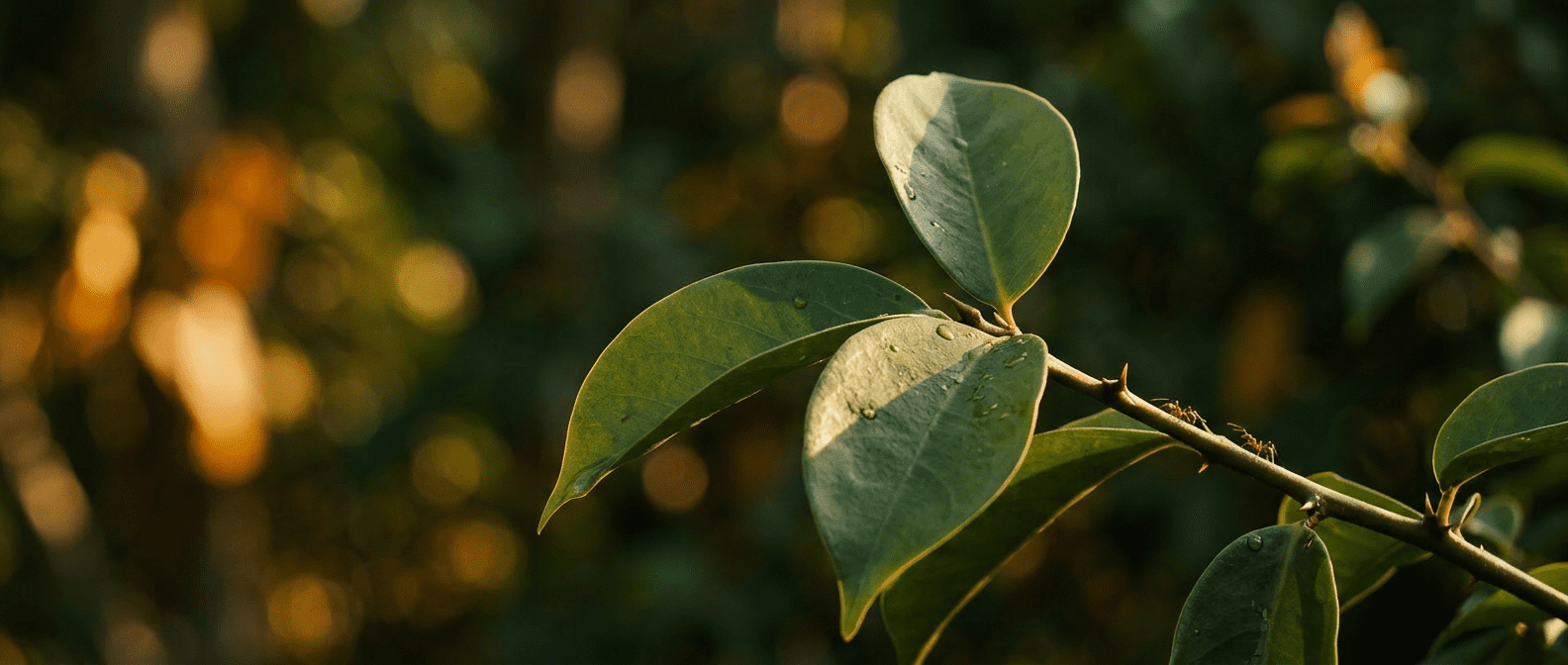
Of the thousands of PANCs in Brazil, one stands out: Pereskia aculeata Miller, known as ora pro nobis.
It’s a leafy green from the cactus family, soft-leaved, climbing, and native to Brazil’s Atlantic Forest region. It’s been eaten in Minas Gerais and surrounding areas since the colonial period.
The leaves contain a natural mucilage, a gel-forming soluble fiber composed of arabinogalactan, a complex polysaccharide that supports healthy digestion and gut motility.14,15
The leaves are also rich in antioxidants, carotenoids, including beta-carotene, lutein, and violaxanthin, alongside flavonoids and phenolic compounds, as well as minerals including magnesium, calcium, iron, and manganese.14,15
So why haven’t you heard of it?
Because it doesn’t fit the industrial model. The leaves are soft and don’t ship well at scale. It grows best in small polyculture gardens tended by hand, not in monoculture fields run by machines. Everything the food industry needs, it isn’t.
The plant survived because people kept growing it and eating it, market or no market. Even the name has a little mischief in it. Ora pro nobis is Latin for “pray for us”, a line from a Catholic litany. As Brazilian folklore tells it, the litany was long, the hedge by the church wall was full of leaves, and while the congregation kept their eyes on the altar, enslaved people slipped out the side door and helped themselves. Every time the priest got to “ora pro nobis”, another handful disappeared. The name stuck. So did the plant.
It was an act of defiance. And it turned out to be an act of nutritional wisdom.
What This Means Today
The science is getting clearer: eating a narrow range of foods is not just boring, it has real consequences. A less diverse diet means fewer micronutrients, less fiber variety, fewer protective plant compounds, and over time, higher risk of the chronic conditions that are now the leading causes of death in most countries.
PANCs aren’t a trend or a niche interest. They’re part of a growing conversation in food science and agriculture about how to build a more nutritious, more resilient food system, one that draws on the botanical knowledge that industrial agriculture left behind.8
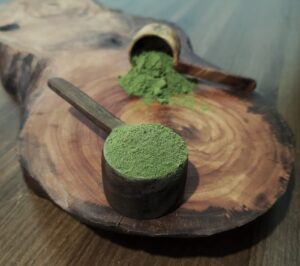
Our ora pro nobis comes from two small farmers in Paraná, neighbors who share their resources. They grew it for their own families, the way families in the region have for generations, and were already selling it in Brazil when we found them. They still do. We buy directly from them, and the leaves are dried and milled into powder for people in the US who never had access to it before.
A plant that industrial agriculture decided wasn’t worth scaling, and communities that knew it was worth keeping.
Sources
- Food and Agriculture Organization of the United Nations. Biodiversity and Nutrition: A Common Path. FAO Nutrition and Consumer Protection Division. Accessed October 13, 2026. https://www.fao.org/fileadmin/templates/food_composition/documents/upload/Interodocumento.pdf
- Food and Agriculture Organization of the United Nations. Effect of human activity on biodiversity: food security. FAO. Accessed October 13, 2026. https://www.fao.org/agriculture/crops/thematic-sitemap/theme/spi/soil-biodiversity/effect-of-human-activity-on-biodiversity/food-security/en/
- Food and Agriculture Organization of the United Nations. The Third Report on the State of the World’s Plant Genetic Resources for Food and Agriculture: In Brief. FAO; 2025. https://openknowledge.fao.org/items/368ec1f9-0897-4c37-b6c7-a65678ebb4b8. Full report: doi:10.4060/cd4711en
- Food and Agriculture Organization of the United Nations. What is agrobiodiversity? In: Building on Gender, Agrobiodiversity and Local Knowledge: A Training Manual. FAO; 2004. Accessed October 13, 2026. https://www.fao.org/4/y5609e/y5609e02.htm
- Bélanger J, Pilling D, eds. The State of the World’s Biodiversity for Food and Agriculture. FAO; 2019. doi:10.4060/CA3129EN
- Knez M, Ranić M, Gurinović M. Underutilized plants increase biodiversity, improve food and nutrition security, reduce malnutrition, and enhance human health and well-being. Let’s put them back on the plate! Nutr Rev. 2024;82(8):1111-1124. doi:10.1093/nutrit/nuad103
- Ali A, Bhattacharjee B. Nutrition security, constraints, and agro-diversification strategies of neglected and underutilized crops to fight global hidden hunger. Front Nutr. 2023;10:1144439. doi:10.3389/fnut.2023.1144439
- Purba NH, Krishnaswamy K. Exploring the potentials of neglected underutilized crops (NUCs): an integrative review for developing a sustainable food system model. NPJ Sci Food. 2025;9(1):199. doi:10.1038/s41538-025-00554-0
- Kinupp VF. Plantas alimentícias não-convencionais da região metropolitana de Porto Alegre, RS. Doctoral thesis. Universidade Federal do Rio Grande do Sul; 2007. http://hdl.handle.net/10183/12870
- Convention on Biological Diversity. Brazil: country profile. Accessed October 13, 2026. https://www.cbd.int/countries/profile?country=br
- Kinupp VF, Lorenzi H. Plantas Alimentícias Não Convencionais (PANC) no Brasil: Guia de Identificação, Aspectos Nutricionais e Receitas Ilustradas. Instituto Plantarum de Estudos da Flora; 2014.
- Ranieri GR, coord. Guia Prático de PANC: Plantas Alimentícias Não Convencionais. Instituto Kairós; 2017. Accessed October 13, 2026. https://ikairos.org.br/publicacoes/guia-pratico-de-panc-2/
- Li X, Siddique KHM, eds. Future Smart Food: Rediscovering Hidden Treasures of Neglected and Underutilized Species for Zero Hunger in Asia. FAO; 2018. https://openknowledge.fao.org/handle/20.500.14283/I8907EN
- Silva NFN, Silva SH, Baron D, Neves ICO, Casanova F. Pereskia aculeata Miller as a novel food source: a review. Foods. 2023;12(11):2092. doi:10.3390/foods12112092
- Takeiti CY, Antonio GC, Motta EMP, Collares-Queiroz FP, Park KJ. Nutritive evaluation of a non-conventional leafy vegetable (Pereskia aculeata Miller). Int J Food Sci Nutr. 2009;60(suppl 1):148-160. doi:10.1080/09637480802534509