Understanding What’s Really Going On
If you’ve ever wondered why your period brings cramps, fatigue, mood swings, low confidence or bloating, the answer lies largely in your hormones. Unlike men, whose hormone levels stay fairly steady day to day, women move through a monthly cycle, and each phase brings hormonal shifts that affect how we feel, physically and emotionally.1
During your period (the early follicular phase), estrogen and progesterone levels drop, triggering the uterus to shed its lining.1 These shifts can also affect mood and energy, which is part of why cramps, low energy or irritability often show up.
The good news? Nutrition can help. Choosing foods rich in specific nutrients can support your body through this demanding stage of the cycle.
Why Nutrition Matters During Your Period
During your period, it’s worth watching your diet more closely. Getting enough iron, calcium and other key nutrients in your meals can make this stage of the cycle a little easier to manage.
The Work Behind the Cycle: FSH and LH
Even while you’re on your period, your body is already preparing for the next phase. This work starts in the brain, where the pituitary gland releases hormones that guide your ovaries.1
- FSH (follicle stimulating hormone) stimulates several follicles in the ovaries to grow. Usually one becomes dominant and matures into the egg that will be released at ovulation.
- As FSH rises and estrogen production ramps up, many people notice they feel a little better than in the first days of bleeding.
- Later, LH (luteinizing hormone) steps in. A sharp surge of LH triggers ovulation, releasing the mature egg.
All of this effort, from brain signals to ovarian response, is focused on releasing one egg each cycle. Good nutrition during your period helps support this demanding work.
Key Nutrients That Can Make a Difference
Why it matters: Menstrual bleeding causes iron loss, and low iron can cause fatigue and trouble concentrating even before anemia develops.2
Evidence: Women with heavy menstrual bleeding are at higher risk of low iron. Iron from plants (non-heme iron) is absorbed better when eaten with vitamin C.3
Food sources: Lentils, beans, spinach, tofu, seeds, fortified cereals and nobis powder (non-heme iron), and lean meats, poultry and fish (heme iron).
Why it matters: Helps your body absorb non-heme iron from plant foods.3
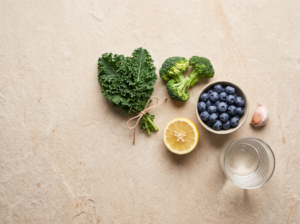
Food sources: Citrus fruits, bell peppers, berries, kiwi, broccoli, tomatoes.
Why it matters: Supports normal muscle and nerve function.
Evidence: Studies on magnesium for PMS symptoms are mixed, and a 2025 systematic review found the evidence insufficient.4
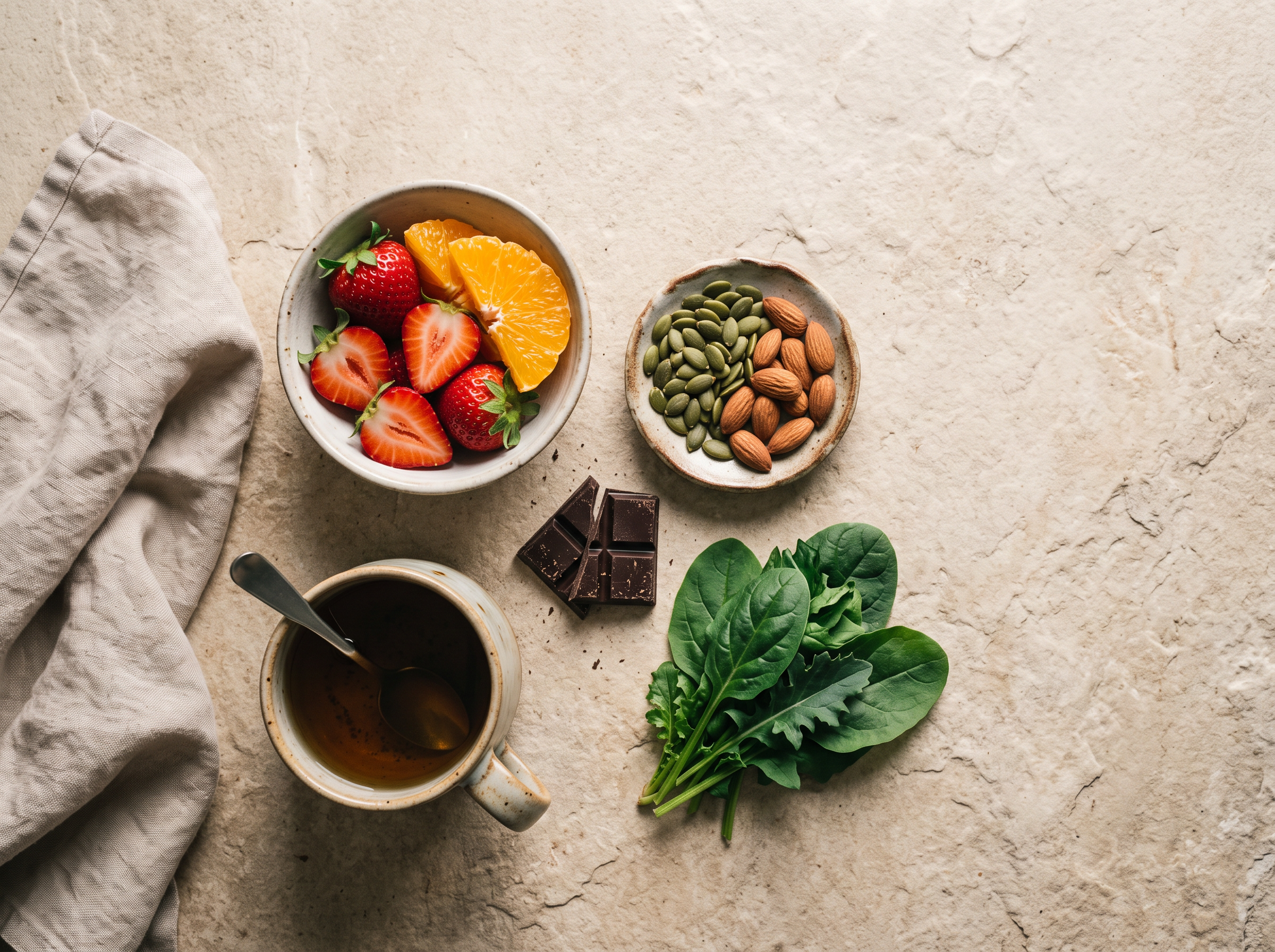
Food sources: Pumpkin seeds, dark chocolate, dark leafy greens, whole grains, almonds and nobis powder.
Why it matters: Supports muscle contraction and relaxation.
Evidence: Two systematic reviews found some evidence that calcium eases PMS symptoms, including mood changes.4,5
Food sources: Dairy, fortified plant milks, tofu, leafy greens, canned salmon or sardines with bones, and nobis powder.
Why they matter: Colorful plant foods supply antioxidants.
Evidence: Evidence on menstrual symptoms is limited. One review found some support for curcumin, the compound in turmeric.5
Food sources: Berries, colorful vegetables, dark leafy greens, turmeric.
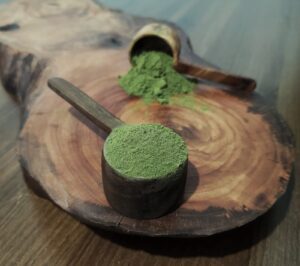
Ora pro nobis, the single leafy green behind nobis powder, brings several of these nutrients together. Based on third party lab analysis, our powder is:
- A good source of iron, magnesium and calcium
- Naturally rich in mucilage, a gel forming fiber
One teaspoon stirs easily into water, juice or a smoothie.
Practical Tips for Your Period Week
- Include at least one iron rich food, a vitamin C source and fiber in your main meals.
- For snacks, add nuts, seeds or dark chocolate once a day for extra magnesium and healthy fats.
- Include one calcium rich food daily. Breakfast is often the easiest place to add it, like fortified plant milk, yogurt or leafy greens in a smoothie.
- Pair beans or lentils with citrus for better iron absorption.
- Consider ginger. In studies, 750 to 2,000 mg of ginger powder a day during the first 3 to 4 days of the period eased cramps, though the evidence is low quality.6,7
- Try a smoothie with berries, fortified plant milk and a teaspoon of nobis powder to start your day.
Sources
- Brown JE, Lechtenberg E, Splett PL, et al. Nutrition Through the Life Cycle. 8th ed. Cengage; 2024.
- Fernandez-Jimenez MC, Moreno G, Wright I, Shih PC, Vaquero MP, Remacha AF. Iron deficiency in menstruating adult women: much more than anemia. Womens Health Rep (New Rochelle). 2020;1(1):26-35. doi:10.1089/whr.2019.0011
- National Institutes of Health, Office of Dietary Supplements. Iron: fact sheet for health professionals. Updated September 4, 2025. Accessed October 13, 2026. https://ods.od.nih.gov/factsheets/Iron-HealthProfessional/
- Robinson J, Ferreira A, Iacovou M, Kellow NJ. Effect of nutritional interventions on the psychological symptoms of premenstrual syndrome in women of reproductive age: a systematic review of randomized controlled trials. Nutr Rev. 2025;83(2):280-306. doi:10.1093/nutrit/nuae043
- Brown N, Martin D, Waldron M, Bruinvels G, Farrant L, Fairchild R. Nutritional practices to manage menstrual cycle related symptoms: a systematic review. Nutr Res Rev. 2024;37(2):352-375. doi:10.1017/S0954422423000227
- Daily JW, Zhang X, Kim DS, Park S. Efficacy of ginger for alleviating the symptoms of primary dysmenorrhea: a systematic review and meta-analysis of randomized clinical trials. Pain Med. 2015;16(12):2243-2255. doi:10.1111/pme.12853
- Pattanittum P, Kunyanone N, Brown J, et al. Dietary supplements for dysmenorrhoea. Cochrane Database Syst Rev. 2016;3(3):CD002124. doi:10.1002/14651858.CD002124.pub2